Professional work
Sandbox / field validationBroadcast Field Monitor
A collector and phone-friendly dashboards that bring equipment health into one view for broadcast field teams.
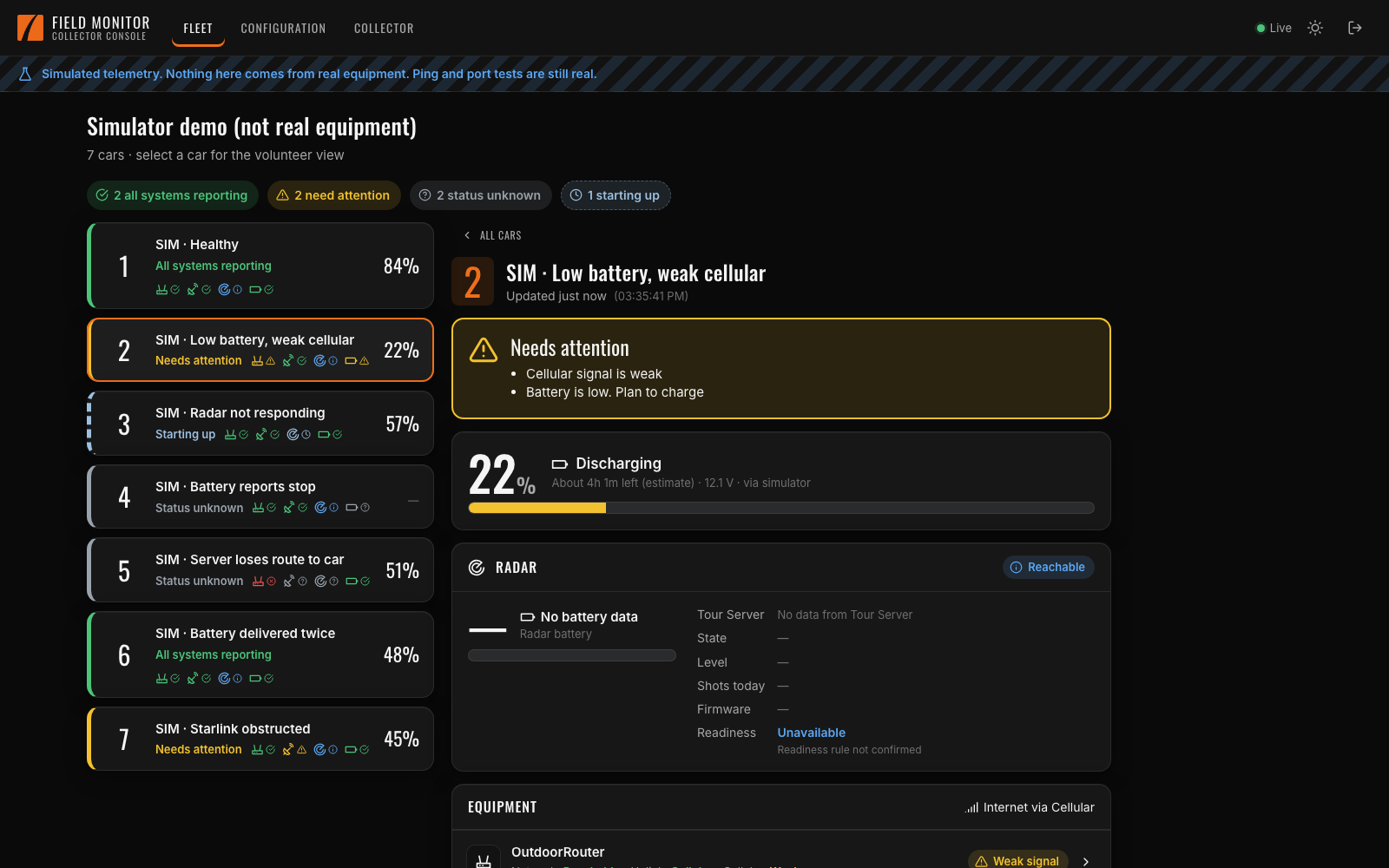 View full size ↗
Equipment health in one view
Queued telemetry and stale-state handling
Separate volunteer and admin views
Built with
 Python
 React
 TypeScript
 Azure
 PostgreSQL
 Docker
Context
A broadcast cart carries several systems with different failure modes: a radar, router, satellite connection and battery. When a route disappears, a dashboard should not declare every device behind it broken.
What I built
- Local collector: device polling, identity checks, event setup and queued telemetry uploads.
- Shared health rules: distinguish unavailable, unsupported, stale and current readings.
- Hosted views: a phone-friendly volunteer dashboard and a separate administrator interface.
- Battery path: a worker that forwards Azure IoT Hub messages independently of the collector connection.
Design decisions
Missing data is not zero, and network reachability is not operational readiness. The interface preserves these distinctions so someone in the field can decide what to investigate.
Device readings are deduplicated and ordered, while polling thresholds reduce status flicker. Local and hosted views share the same health logic. Event lifecycle controls support the rhythm of a tournament, including setup and overnight pauses.
Project overview
The system combines a Python collector, React interfaces, persistent local/cloud state and Azure deployment definitions. A local desktop console supports configuration and network checks; the hosted service makes the resulting information available to people using phones.
The current implementation has local and sandbox deployment evidence. Some device integrations still require live field validation, and the Windows packaging path is separate from a completed release. Simulator scenarios make it possible to examine route loss, stale battery readings and other conditions before connecting the full equipment stack.