Personal project
Personal prototypeBrane Wake
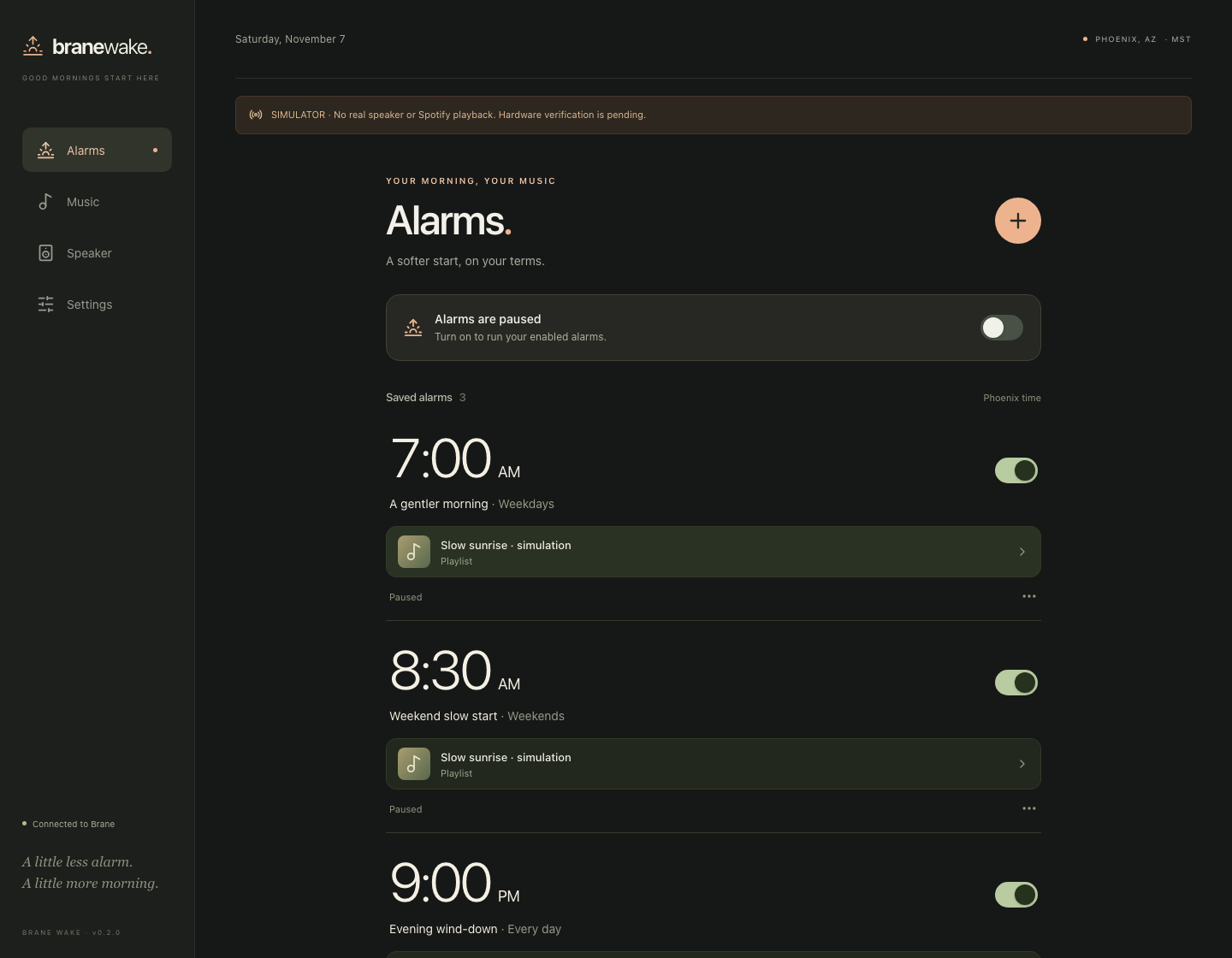
A personal music-alarm project with persistent schedules, gradual volume changes and playback through existing home-audio services.
 View full size ↗
Persistent alarms and snooze
Spotify and Music Assistant integration
Volume fades and recovery behavior
Built with
 Python
 FastAPI
 React
 SQLite
 Docker
 Raspberry Pi
A closer look
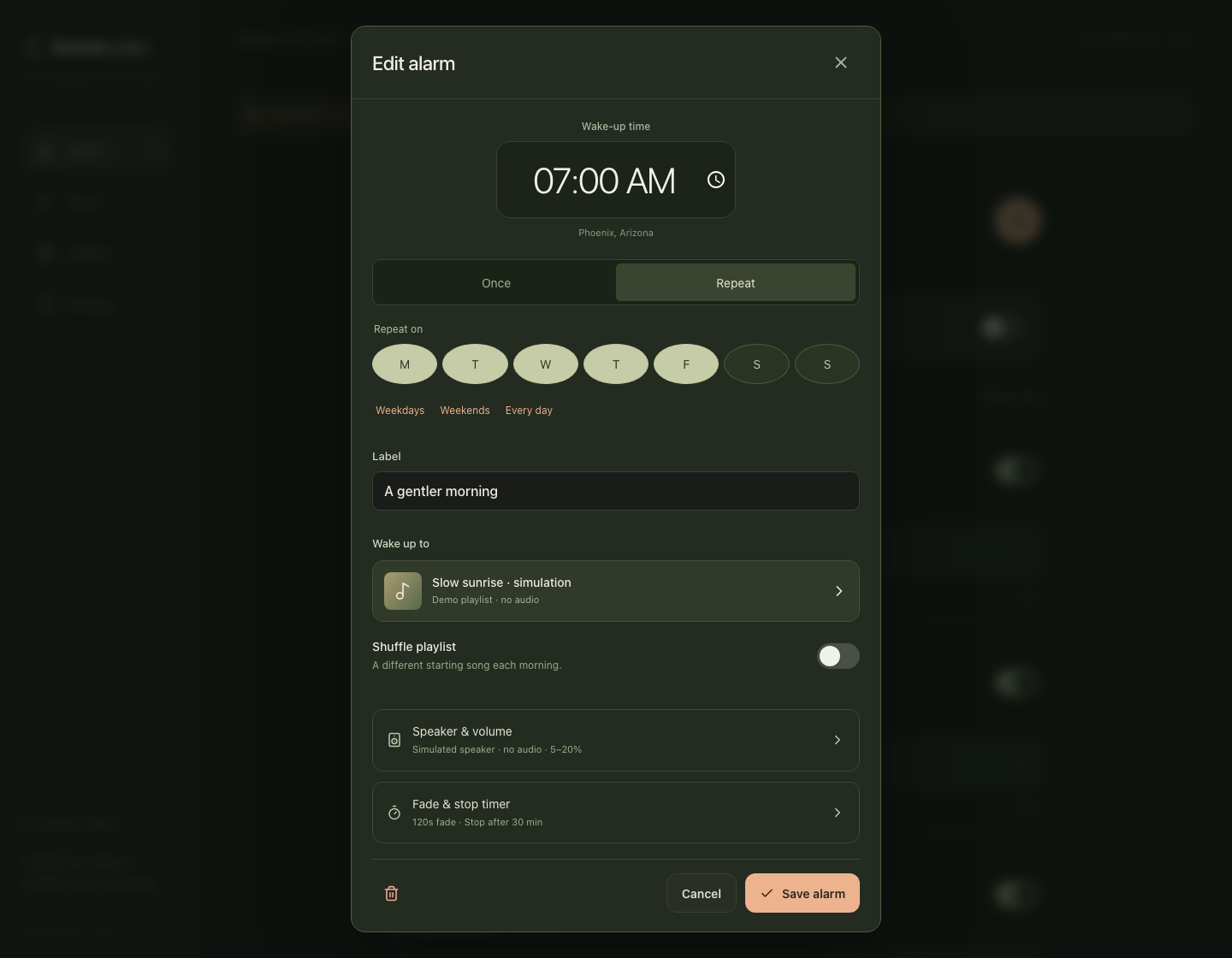
Inside the workflow.
Context
A wake-up routine should keep its schedule even when a phone locks or a browser closes. Home audio also introduces practical questions about devices, volume control and who currently owns a playback session.
Project features
- Persistent scheduling: alarms, snooze and recovery behavior backed by SQLite.
- Mobile-friendly controls: a React interface for sources, destinations and routine settings.
- Playback integration: Spotify catalog access and Music Assistant adapters for existing speakers.
- Session-aware behavior: gradual volume changes and respect for someone manually taking control.
Design decisions
Scheduling runs on the service, independently of the open interface. Restart and missed-schedule handling belong in the application rather than relying on a browser tab to stay alive.
Playback control is also conservative. If a person starts something else, the automation should avoid treating that new session as its own. Device compatibility and real audio behavior require checks beyond a successful API response.
Project overview
Brane Wake is a local personal integration prototype using FastAPI, React and SQLite. Its deployment work spans Raspberry Pi/systemd and Ubuntu/Docker setups, with migration, rollback and troubleshooting notes.
The project connects existing music and playback systems; Spotify, Music Assistant and AirPlay remain third-party platforms. Local records include short playback and volume-fade checks, while long-idle reliability and device compatibility remain ongoing development areas.
It is an example of a small personal tool with substantial systems detail: persistence, network services, speaker behavior and a simple interface all need to agree for a routine to feel dependable.